Live Dream Catcher Casino in the UK: How It Works
 Available in GB
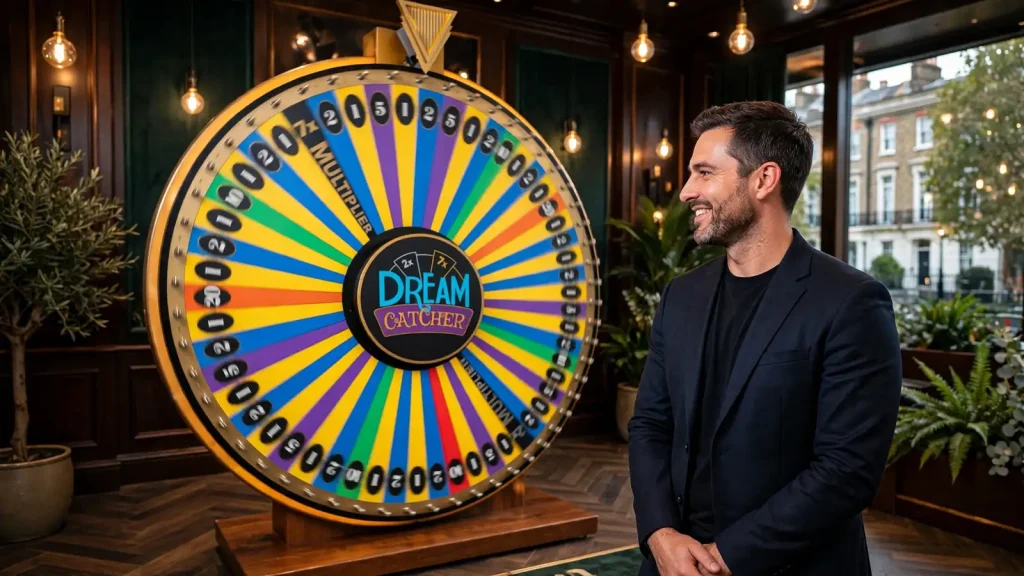
The guide explains how the studio stream and betting panel work, and what to check when comparing live casino options.
Table of Contents
- What a Live Dream Catcher Session Involves
- Playing Live From an Online Casino
- How to Assess a Casino Offering the Game
- What to Check on a Live Casino Site
- The Wheel, Roulette Variants and Their Odds
- Playing the Game: What Live Blackjack Shows
- A Review Without Unverified Claims
- Demo Play and the Limits of Free Play
- Before Playing a Live Session
- Bonuses, Wagering Terms and Live Tables
What a Live Dream Catcher Session Involves
A live Dream Catcher casino session is built around two parts: a real-time studio broadcast and an on-screen betting interface. The broadcast shows a human dealer conducting the game, while the interface is where players make their selections and place bets. It is not simply a digital animation presented as live play; the game action is streamed from a studio.
That distinction matters because the image and the controls serve different purposes. The video shows what is happening at the table or game station. The interface records the player’s choices. A bet is not made by speaking to the dealer or handling anything in the studio; it is submitted through the online controls. The dealer conducts the live game, while the software connects the player’s selection to the session.
The word “live” describes the source and timing of the game action. The studio produces the event as it happens, and the stream carries that event to the screen. The player is therefore watching a human-led game rather than waiting for a computer-generated sequence to be displayed. The betting panel remains digital, even though the game itself is presented through a live feed.
When looking for a UK casino for live Dream Catcher in 2026, payout timing is one practical detail to check. The entries below note the only verified information available for each operator.
1. NightWin
Payout speed: 1-3 business days NightWin lists a payout speed of 1–3 business days.
2. Chanze
Payout speed: 1-3 business days Chanze lists a payout speed of 1–3 business days.
3. BeOnBet
Payout speed: 1-3 business days BeOnBet lists a payout speed of 1–3 business days.
4. x3bet
Payout speed: 1-3 business days x3bet lists a payout speed of 1–3 business days.
5. Amunbet
Payout speed: 1-3 business days Amunbet lists a payout speed of 1–3 business days.
6. EvoSpin
Payout speed: 1-3 business days EvoSpin lists a payout speed of 1–3 business days.
7. SpinFormula
Payout speed: 1-3 business days SpinFormula lists a payout speed of 1–3 business days.
8. WinBeast
Payout speed: 1-3 business days WinBeast lists a payout speed of 1–3 business days.
9. NightLuck
Payout speed: 1-3 business days NightLuck lists a payout speed of 1–3 business days.
10. SlotoSport
Payout speed: 1-3 business days SlotoSport lists a payout speed of 1–3 business days.
I find it useful to keep those two layers separate when judging what a live label actually tells us. It indicates a streamed game with a human dealer and online betting controls. On its own, it does not settle every other question about a particular title: the exact rules, the way a round is structured, or the options shown in the interface depend on the game and the version offered. The name Dream Catcher is not a substitute for those details.
In practice, the screen usually gives the broadcast and the betting controls distinct jobs. The stream communicates the dealer’s actions and the progress of the live game. The interface presents the available choices and lets a player submit a wager. Once a choice has been entered, the game continues in the studio rather than being generated separately on the player’s device. The screen brings those elements together, but it does not make them the same thing.
That arrangement also explains why a live session can feel different from a purely digital game without requiring any assumptions about Dream Catcher’s specific rules. A person is visible conducting the game, and the player follows that activity through a video feed. The interface is still the point of contact for betting. It is a mediated table, not a physical one.
For a title presented as Dream Catcher live casino, the sensible reading is therefore narrow: the offer is described as a live-dealer experience, but the label alone does not confirm the details of a particular operator’s version. The studio stream and betting panel define the basic format. The rules and available choices need to be read from the game information presented with that version, rather than inferred from the title or from another live game.
This is a small distinction, but it prevents a common misunderstanding. A live feed does not mean that every part of play happens in the studio. The dealer and game action are there; the player’s wager is entered remotely through the interface. Nor does the presence of a human dealer, by itself, establish that two games with similar names work in exactly the same way. The format is shared across live dealer games, while individual game details can differ.
Casino Dice Games in the UK: Understanding Online Play
The live Dream Catcher casino UK 2026 label may appear in a lobby beside other live titles, but the basic format remains the same: studio action is streamed in real time, and bets are placed through controls on screen. That is the useful starting point before looking at a specific version. It says what kind of presentation is being offered, not everything about how its rounds or betting options operate.
I would treat the broadcast as the game’s visible record and the interface as the means of participation. That is the core of a live session. No physical table access; no purely computer-generated dealer.
Playing Live From an Online Casino
The difference between a live table and a digital game is not just what appears on screen. A digital game can move from one result to the next without waiting for a studio feed. Live play follows events as they happen: the dealer or presenter conducts the round, and the betting interface opens and closes around that sequence. That makes the session feel less like clicking through a self-contained game and more like joining a broadcast with a defined rhythm.
For someone looking for a Dream Catcher game through an online casino, that distinction matters before the first stake is placed. The live version depends on a real-time stream and a betting panel working together. A digital game, by contrast, does not need a live studio feed to present its next round. The two formats may share a name or broad theme, but the pace and practical demands are different.
I have seen players treat the live table as though it were simply a digital game with a presenter added. That expectation tends to cause friction. A live round cannot be hurried along just because someone is ready to act; it proceeds with the broadcast. There can be a pause while the betting window is open, followed by a period when no further bets can be entered. The transition is part of the format, not necessarily a technical fault.
Online Casino Tournaments UK: Free Entry Rules
This slower tempo changes how a session feels. Digital games can make repeated rounds available with little waiting between them. Live play has pauses and a visible sequence, so fewer decisions may fit into the same span of time. That is not a promise of lower spending: a slower pace can make each decision more noticeable, but the total still depends on the stakes and how long the session continues. A budget set in advance remains more useful than relying on the stream itself to impose a limit.
The connection also matters in a way it does not for an offline game. A stable internet connection is needed to keep the stream and the betting interface usable together. If the video stutters, the action becomes harder to follow; if the interface is slow to respond, it may be unclear whether a selection has registered before betting closes. A steady connection cannot control the game’s outcome, but it reduces avoidable uncertainty about what is happening on screen.
That distinction is practical rather than technical. A live stream is not simply decorative footage placed over an independent digital result. The player is watching a real-time session while using the on-screen controls, so video quality and interface responsiveness both affect the experience. There is little value in treating a slow connection as a cue to keep clicking. Repeated inputs can add confusion rather than clarity. Better to pause than to guess what has gone through.
Minimum stakes deserve the same attention. Live tables can require more per decision than digital games, and that can change whether a format fits a planned budget. One specialist review reported that some live roulette and baccarat tables began at 20p, while blackjack tables on the same general comparison had higher entry stakes. That is a report from a particular review, not a dependable price list for every casino or a guarantee about a current Dream Catcher table. Limits can differ between operators and may change, so the displayed table information is the relevant figure before play.
Do
- Set a budget in advance
- Check minimum stakes before play
- Use a stable internet connection
- Pause if the connection is slow
Don’t
- Rely on the stream to limit spending
- Keep clicking during a lag
- Raise budgets to meet table minimums
- Chase a result after a loss
The point is not to assume that every live game is expensive, or that a low starting stake is always available. A person comparing a live Dream Catcher option with digital alternatives should distinguish the minimum permitted bet from the amount they intend to stake. A table’s entry point is a boundary, not a recommendation. If the minimum is already above the planned amount, the session does not fit that budget; stretching it to make the table accessible reverses the purpose of setting one.
The live environment can also encourage longer attention than a quick digital round. There is a host, a stream and a sequence to follow. Those elements may make play feel social or more involving, but they do not make outcomes more predictable. Nor does watching a previous round provide a reliable basis for the next one. The stream shows the current session; it does not offer a method for controlling results.
In my experience, the practical test is straightforward: can the session be followed comfortably, does the connection remain steady, and is the table’s minimum within the amount already set aside? If any answer is no, the live format is a poor fit at that moment. There is no need to compensate by raising the budget or chasing a result. That is where a small convenience becomes a bad decision.
Live play trades speed for a shared, real-time presentation. The trade-off is clear. This is entertainment, not gambling advice.
Live Casino Lightning Roulette in the UK: How It Works
How to Assess a Casino Offering the Game
The first check is whether the operator holds a current UK Gambling Commission licence for serving the British market. Live-dealer casinos are legal in the UK when they operate under that licence; an attractive games page, familiar payment branding or a polished design does not replace it. I start with the operator’s legal identity and verify that against the Commission’s public register. If the name on the site does not line up with the licensed business, that is a reason to pause, not a small detail to explain away.
This is a more useful starting point than asking which casino is “best”. That word can describe different things: a broad games catalogue, a particular table, an offer, or simply a prominent position in a comparison. None establishes that an operator is suitable. A UK-facing site should first meet the legal threshold, then be judged on what it actually provides and how clearly it explains its terms.
Check the operator, not just the branding
A casino’s brand name may not be the same as the company named in its terms or licence information. I compare those details rather than assuming that a logo identifies the legal operator. The relevant question is whether the business taking the customer’s account and offering real-money gambling is authorised for the British market.
Attention: A site’s own claim of being licensed is not the same as independently confirming the licence and the business it covers via the official register.
The distinction matters because a licence is not a decorative trust badge. It places the operator within the UK regulatory system. A site’s own claim that it is “licensed” is not the same as independently confirming the licence and the business it covers. If the details are unclear, or the operator’s identity cannot be reconciled with its regulatory information, there is no sound basis for treating the claim as settled.
Read the rules before weighing the offer
Once the legal position is clear, I look at whether the casino explains the terms that govern play. The wording should make it possible to understand what applies to an account, a promotion or a game without relying on a sales headline. “Generous” is marketing language; the conditions are what determine whether an offer has any practical value.
This matters especially when an offer is attached to a live table. Bonus terms can specify wagering requirements, game weighting and maximum-bet conditions. Those details can change how much a promotion contributes towards a requirement, or whether a game is eligible at all. A large headline figure is not a useful comparison on its own. The terms are the product.
I also avoid treating a promotion as a reason to overlook other checks. An offer does not make an operator more legitimate, and it does not alter the basic risks of gambling. A set budget should be decided before play and kept separate from any promotional balance. Entertainment, not a way to make money.
Mines Casino Game UK: Rules, Risk and Free Play
Separate evidence from impression
The presentation of a live casino can create a strong impression of quality, but appearance is not evidence of fair or suitable terms. I separate what can be checked from what is merely asserted. Licence details, operator identity and written rules are concrete. Words such as “premium”, “trusted” or “best” need supporting information before they mean anything.
The same discipline applies to claims about a particular game. A casino may show a game title or use a familiar image, but that does not establish every detail of its rules, availability or performance. Those claims need to be visible and specific on the operator’s own information. If a detail cannot be checked, it should not carry much weight in a decision.
Comparisons also depend on the question being asked. One player may care about whether the operator is properly licensed; another may care about the terms attached to an offer. A general label such as “top live Dream Catcher casino” collapses those separate tests into a single verdict. I would rather assess the underlying evidence than borrow a ranking that does not explain its criteria.
Make a decision from the checks
A practical assessment can stay simple without becoming superficial: confirm the UK Gambling Commission licence and the identity of the operator; read the relevant rules and promotion terms; then decide whether the available information is clear enough to support a choice. If one of those checks fails, a polished interface or an appealing offer does not repair it.
Assessing a Casino
- Confirm the UK Gambling Commission licence
- Verify the legal identity of the operator
- Read the game rules and terms
- Review wagering requirements for promotions
There is no universal winner for every player. The responsible question is whether a specific licensed operator’s terms and presentation meet the standards required for a particular decision. If the licence cannot be confirmed or important conditions remain ambiguous, the sensible response is to leave the claim unresolved rather than fill the gap with an assumption.
This is an assessment framework, not an endorsement or a guarantee of outcomes. Live casino play remains gambling, and no checklist removes the possibility of losing money. The useful distinction is between verifiable information and advertising language. Keep the former; discount the latter.
What to Check on a Live Casino Site
A live casino page is both a video service and a betting interface. The studio feed shows a human dealer handling the game in real time; the site’s on-screen controls are where players submit their bets. That division matters. The stream can look polished while the controls remain difficult to follow, or the interface can be clear while the video struggles to keep pace.
For a live Dream Catcher session, the useful site-level check is whether the table view and betting interface remain understandable together. The dealer’s actions need to be visible, and the betting area should make it clear when the game is accepting bets and when that window has closed. Live play moves at a slower pace than a digital version, but timing still matters: a bet entered after the round closes cannot affect it.
Chicken Road Casino UK: Game Labels and Risks
Streaming also changes what “smooth” means. A stable internet connection is necessary for the feed to remain usable. If video freezes or falls behind, the session becomes harder to follow, even if the betting controls still respond. I treat the video and interface as one service, not separate features. A clear picture alone is not enough.
The site’s presentation can also affect how much information is competing for attention. A compact table view may make the game easier to follow on a smaller screen, while extra panels can reduce the visible area devoted to the dealer and betting interface. That is a matter of usability, not evidence that the game itself has different rules.
Minimum stakes are another site-level detail worth noticing before a session begins. Live games have higher minimum bets than digital versions, so the amount required to take part can shape whether a table suits a chosen budget. The displayed table information should be checked before betting, rather than inferred from the look of the stream.
I have seen “live” used as though it described the whole experience. It describes the dealer feed; it does not guarantee a flawless connection or a particular interface. The practical test is whether the stream, betting area and table information work together clearly enough to follow each round. Clear enough.
The Wheel, Roulette Variants and Their Odds
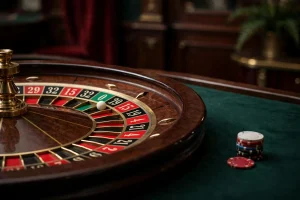
A live wheel and a computerised roulette game may present similar betting choices, but the result is produced differently. In live roulette, a dealer spins a physical wheel and the ball settles into one of its pockets. In a computerised version, a Random Number Generator determines the result. The distinction is about the mechanism behind the spin; a visual animation does not, by itself, make a game live.
European Roulette
Features a single green zero, providing odds of 1 in 37 for a straight-up bet.
American Roulette
Includes both zero and double zero (0 and 00), resulting in odds of 1 in 38 for a straight-up bet.
That matters when a search for a Dream Catcher casino wheel leads towards roulette information. Roulette’s familiar wheel and numbered layout are useful points of comparison, but they do not establish the rules or odds of a separate wheel game. I keep those claims apart. A wheel on screen is not enough evidence to infer its mechanics.
European and American layouts
The key layout difference is the number of green pockets. European Roulette has a single green zero. American Roulette has both zero and double zero, shown as 0 and 00. The extra pocket changes the chance of a selected number coming up: the stated odds are 1 in 37 in European Roulette and 1 in 38 in American Roulette.
That difference is easy to overlook when the table layouts look nearly identical. On a straight-up bet, the player selects one number; the additional pocket in the American layout means there are more possible outcomes without changing that selection. The consequence is a less favourable chance of hitting the chosen number. Small visual detail. Material difference.
Roulette also offers bets covering groups of numbers rather than one number. The stated house edge is 2.9% for straight-up bets and 2.7% for other bets. A house edge describes the casino’s mathematical advantage over repeated play, not a prediction of what will happen on an individual spin. A short run can produce a very different result; it does not alter the underlying comparison.
What the figures do—and do not—show
The European and American odds describe the chance of a number being selected on those layouts. They should not be treated as a general forecast for every wheel game, nor as evidence about a particular Dream Catcher version. Game names and graphics can resemble one another while the underlying rules differ.
In practice, I read the layout and the rules together. The number of pockets explains the basic odds comparison, while the bet type determines which outcomes count as a win and how the stated house edge applies. A live dealer changes how the spin is conducted and shown; it does not erase the difference between one zero and two. The wheel supplies the result. The rules define the bet.
JetX Casino Game in the UK: Labels and Evidence
Playing the Game: What Live Blackjack Shows
Live blackjack is a useful way to understand what a human-dealer game looks like on screen. It is an illustration of the live format, not a claim that blackjack is part of the Dream Catcher offering. The distinction matters: a shared studio setup does not mean every live game uses the same equipment, rules or way of playing.
In blackjack, a human dealer handles physical cards from a standard deck. The action is streamed in real time, so the dealing can be watched as it happens. Players interact through the game interface, while the dealer conducts the hand at the table. The screen is therefore more than an animation: it shows a real person dealing real cards, with the digital interface providing the means to take part.
The aim is to finish with a hand that beats the dealer’s without going over 21. That gives the game a simple central objective, even though the decisions around a hand can take more thought. The live format does not change that objective. It changes how the action is presented and how decisions are made in relation to a dealer who is dealing in real time.
That difference is easy to underestimate. In a fully digital game, the action is generated by software and presented through graphics. In live blackjack, the dealer and cards are visible in the stream, while the interface carries players’ decisions to the table. The video and the controls work together, but they have separate jobs: one shows the hand, the other records participation.
From the operator’s side, this format has a practical consequence. The dealer sets the visible pace of the hand. The software can display choices, but it cannot make the table feel like a rapid sequence of isolated results without changing the character of the game. A human presence is part of the product, not decoration around a computerised round.
The ability to see and interact with the dealer also gives the session a social layer that a digital simulation does not reproduce in the same way. Interaction does not remove the underlying rules or make a hand more predictable. It simply makes the experience feel closer to a table game, with the dealer as the person conducting the action.
This is why live blackjack works as a concrete comparison when considering a live casino game. It shows the division between a streamed table and an on-screen interface, and it makes clear that “live” describes how the game is delivered, not a promise of a particular result. The physical cards and dealer are visible; the outcome still depends on the cards dealt.
The same distinction helps keep expectations about Dream Catcher grounded. A person searching for a live Dream Catcher casino game is looking for a particular game, not blackjack by another name. Blackjack can explain the human-dealer format, but it cannot establish anything about Dream Catcher’s own presentation or rules. Different game, same broad format.
A Review Without Unverified Claims
A useful review of Dream Catcher has to separate what the name suggests from what can actually be described. It is not enough to call a game “live” or “immersive”: those labels do not establish stream quality, interface behaviour, payout handling or the rules at a particular table. I would not treat any of those as a settled feature without seeing them in the game itself and checking the displayed rules.
There are clear points against which live roulette can be reviewed. At a live roulette table, a dealer spins a physical wheel; computerised roulette instead relies on a Random Number Generator. In either case, the ball settles on a number, and a selection wins when it matches that result. These are meaningful distinctions between formats, not evidence about a particular Dream Catcher session.
The same care applies to wheel details. American Roulette has a double-zero pocket marked 00 as well as zero. That changes the layout and is worth identifying when reviewing roulette. It should not be attributed to Dream Catcher merely because a game has a wheel, nor should roulette rules be assumed to describe a separately branded game.
A polished stream or familiar game name is not evidence of specific rules or favourable outcomes; these must be verified through the operator’s written terms.
A review can therefore be precise without manufacturing a verdict. It can explain the difference between a physical wheel and a generated result, identify what the screen and rules actually show, and report only observed details. Claims about reliability, pace, dealer conduct or special features need direct, current evidence. A polished stream is not proof of favourable outcomes; a familiar name is not a rulebook.
I have seen how promotional language can turn an impression into an apparent fact. “Authentic” may describe the presentation, not the game’s mechanics. “Fast” says little about how long a live round takes. The distinction matters. A review should not imply a performance rating or a Dream Catcher-specific feature where no verifiable observation supports it.
The soundest assessment is narrow: describe what is visible, distinguish general roulette mechanics from the named game, and avoid filling gaps with assumptions. That is less dramatic than a star rating built on guesswork. It is also more useful.
Demo Play and the Limits of Free Play
Interest in a no-cost version of Dream Catcher is understandable: it can sound like a way to see the game before risking money. But a search for a demo does not establish that one is available, or that any particular version reproduces the live game. Availability depends on the casino and its offering, so a page describing a demo is not enough to confirm what can actually be played.
I have learned to separate the label from the function. “Free play” may describe access without a real-money stake, but it does not mean that the session creates a cash balance or a right to withdraw winnings. A result in a demo carries no real-money payout. That boundary matters even when the screen resembles a live casino table: appearance alone does not turn practice play into a real-money session.
The same caution applies to claims about how a demo works. Without clear details from the casino, it is not safe to assume that it uses a live dealer, follows the same rules as a real-money table, or offers the same interface. A demo could be a different kind of presentation entirely. The name is not proof.
I would treat a free version as a limited way to familiarise oneself with whatever is actually shown, not as evidence about real-money outcomes. Results in free play cannot establish what will happen in a later session, and they should not be read as a pattern to follow. No predictive value.
The practical distinction is simple: free play has no real-money outcome; real-money play involves stakes and can result in losses. Any displayed balance or result in a no-cost mode should be understood within that mode, rather than as money available to cash out. The content here is for entertainment purposes only, not gambling advice.
Free Play Limits
Results in a demo or free play mode carry no real-money payout and cannot be withdrawn as cash.
Before relying on a demo description, the casino’s own page should make clear whether the option exists and what it represents. If those details are absent, the honest conclusion is narrow: the availability and format have not been established. That is less satisfying than a promise, but more useful than treating an uncertain offer as a feature.
Before Playing a Live Session
Getting ready to play Dream Catcher live means dealing with two things at once: the streamed table and the betting controls on screen. The dealer’s actions appear in real time, while the interface is where a player selects a stake and submits a bet. The controls are digital; the game itself is not being generated by the same process as a standard computerised game.
I have found that the useful check comes before any stake is entered: the selected option and amount should be clear on the screen. A live interface can make a decision feel immediate, but the session moves at the dealer’s pace, not at the speed of a rapid sequence of digital rounds. There is time between decisions, yet that does not make the stake less real. A set budget, chosen before play begins, gives the session a boundary rather than leaving each decision to the moment.
The streamed format also makes timing part of the experience. Bets are submitted through the interface as the game proceeds, and the next stage depends on the live table. A slow connection can interrupt that exchange, so a stable internet connection matters; repeatedly trying to catch up is no substitute for a clear display of what has been placed.
Before starting, the table rules and paytable deserve a look. They explain the available choices and how outcomes are treated. That is a more useful preparation than assuming every live game uses identical controls or terms. If the screen is unclear, or the connection is unreliable, there is little reason to begin a paid session immediately.
I would treat the first decision as whether the setup is understandable and the planned spend is affordable—not as a prompt to keep playing. This is entertainment, not gambling advice. Once the boundary is set, it stays set.
Bonuses, Wagering Terms and Live Tables
A bonus headline can look more generous than it proves to be. The operative detail is the wagering contribution assigned to each game: live tables may count for only a small share of the required play. One set of terms might give live games a 10% weighting, meaning eligible stakes advance the requirement much less than stakes on a fully weighted game. The percentage is not universal; the terms attached to the offer decide.
That distinction matters when comparing an online casino offering Dream Catcher. A welcome bonus may be aimed at slot play rather than live tables. One specialist review describes UK welcome offers as predominantly free spins on slots, which cannot be used at live tables. That is a description of the offers it reviewed, not a promise about every casino or promotion.
I have seen the headline do its job while the conditions quietly narrow the use case. “Casino bonus” sounds broad; the rules may define eligible games, contribution rates, maximum stakes and whether a bonus can be used at all on a live table. Those details are the offer.
Before opting in, check the wagering requirement, the weighting for live games and any maximum bet condition. Also check whether the promotion applies to the chosen table, rather than assuming that a game appearing in the casino lobby qualifies. A bonus with low live-game weighting may add little to a session, even when the displayed value seems substantial.
The sensible comparison is not the largest advertised figure. It is whether the terms fit the intended play, and whether the bonus is worth accepting at all. Set a budget before playing and keep to it; a promotion does not change the game’s outcome. This is entertainment content, not gambling advice.
How do you play live roulette?
Place your bet using the on-screen controls while the live dealer spins a physical wheel. You win if the ball lands on a number you selected.
What are the different types of roulette you can play with a live dealer?
The types covered here are European Roulette, with one green zero pocket; American Roulette, with 0 and 00; and French Roulette, where an even-money bet loses only half when the ball lands on zero.
What is the difference between European and American Roulette?
European Roulette has one green pocket, 0, while American Roulette has two, 0 and 00. The odds of winning are 1 in 37 on European Roulette and 1 in 38 on American Roulette.
Casino Games

Aviator Casino Game UK: Rules, Licensing and Play
A guide to Aviator’s format, casino terms and the distinction between UKGC-regulated operators and offshore...
3-Reel Slots in the UK: Play, Rules and Odds
A guide to online three-reel games, separating reel count and classic styling from odds, features,...
5-Reel Slots in the UK: How to Compare Games
Five vertical columns are only the layout; each game's rules define qualifying symbol patterns and...
Bonus Buy Slots in the UK: Demo and Feature Guide
A practical guide to exploring the feature, understanding its limits and weighing how it can...

Fast-Payout Online Casinos in the UK: Keno Returns
Keno returns depend on selected spots, catches and the paytable; a quick round does not...

First Deposit Bonus Casinos in the UK: What to Check
A first-deposit label does not define the reward: the promotion’s terms determine how it is...

High-volatility slots UK: how payouts and variance work
High volatility usually means less frequent wins with returns concentrated in larger payouts, not a...

Best Keno Casinos Online in the UK: What to Check
See how spot selections, draw formats and paytables shape online keno, and what to check...

Live Casinos in the UK: Licensing, Games & Offers
Understand who needs a licence, how live tables work and what to check in casino...
Low-Volatility Slots in the UK: How They Work
Low volatility describes a tendency towards more frequent, smaller returns, not a guarantee of wins...

Online Slot Payout Percentages: What RTP Means
A payout percentage describes designed return across broad play, not the result a player should...
RTP in UK Casino Slots: What the Figure Means
RTP is a long-run mathematical expectation, not a guide to when a slot will pay...

UK Video Slots: Volatility, Features and Casino Checks
Understand how returns, game features and casino checks affect the way online video slots are...

Casino Dice Games in the UK: Understanding Online Play
Online dice can describe a visual style, but the display alone does not explain a...

Chicken Road Casino UK: Game Labels and Risks
A casino label alone does not establish a game’s format, rules, availability or the conditions...

Crash Casino Games in the UK: How They Work
A crash title’s rules, randomness, payment options and access to real-money play depend on the...
Crazy Time live casino game show in the UK: how it works
Crazy Time pairs a real-time studio stream and human dealer with on-screen controls for submitting...

Deal or No Deal casino UK: how the game works
See how the briefcase format translates into slot play, and what the available details do—and...

Fast Payout Online Casinos UK: How to Assess Claims
A fast-payout claim can refer to different stages or conditions, so its wording alone does...
French Roulette Online Casinos in the UK
La Partage and En Prison affect even-money losses, while wheel type, game format and table...
Hi-Lo Casino UK: Rules, Calls and Game Types
See how card comparisons, tie rules and pay tables affect outcomes across live, reel-based and...

High-RTP slots in the UK: what RTP can tell you
RTP describes a game's theoretical return over extensive play, but it cannot predict an individual...
JetX Casino Game in the UK: Labels and Evidence
A cautious guide to JetX’s format, demo play, UK market context and the limits of...
Live Baccarat Online Casinos in the UK: What to Check
A practical guide to UK licensing, baccarat bets, live table formats, commissions and the bonus...

Live Blackjack at UK Online Casinos: What Matters
Live blackjack adds a streamed dealer and a slower rhythm, so table pace, connection demands...

Live Casino Lightning Roulette in the UK: How It Works
A practical look at the live stream, roulette mechanics, table rules, offers and limits—without treating...

Live Roulette UK with English-Speaking Dealers
A live dealer spins a physical wheel in a studio, while the online interface carries...

Mines Casino Game UK: Rules, Risk and Free Play
The guide separates game mechanics and practice claims from operator, regulatory and real-money considerations. Mines...

Monopoly Live Casino in the UK: How It Works
The guide separates the studio format from game rules and covers connection, table terms, free...

Online Bingo in the UK: How Rooms and Slots Work
A practical guide to ticket draws, winning patterns, real-money and free play, and how bingo...
Online Casino American Roulette in the UK
American Roulette uses both 0 and 00, shaping its layout, wheel and betting terms. American...

Online European Roulette in UK Casinos: Rules & Odds
The single-zero wheel, its bets and payouts, and differences between RNG, live roulette and roulette-themed...

Online Casino Games for Real Cash in the UK
The guide explains spin costs, licence boundaries, bonus conditions, cash payouts and Android app choices...
Online Casino Tournaments UK: Free Entry Rules
A practical guide to entry costs, prize conditions, scoring rules, spin limits and tournament schedules....

Online Casinos Without ID in the UK: What to Know
A light-touch registration process does not remove a licensed casino’s duty to verify age and...

Plinko Casinos in the UK: Licensing and Payments
The game label alone does not show whether a platform is within the UKGC system...