Live Roulette UK with English-Speaking Dealers
 Available in GB

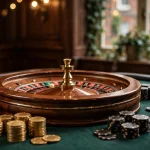
A live dealer spins a physical wheel in a studio, while the online interface carries the action and lets players submit bets.
Table of Contents
- How Live Roulette Works Online
- Roulette Casinos: What the UK Licence Covers
- Roulette Casino Sites and the Live Table Experience
- What “Best” Means for a Live Roulette Table
- European and American Roulette: The Wheel Changes the Odds
- Playing for Real Money: Pace, Stakes and Limits
- Free Roulette Play: What the Verified Facts Do—and Don’t—Show
- Roulette Bonuses: Read the Weighting Before Opting In
- Roulette House Edge and the Limits of Betting Systems
- Lightning Roulette: Keep Claims About Results in Check
How Live Roulette Works Online
Live dealer roulette combines a physical game in a studio with a digital betting interface. A human dealer spins the wheel, while a camera feed carries the action to the player’s screen in real time. Bets are entered on the screen rather than placed on the physical table. The result comes from the ball’s landing place on the wheel, not from a computer generating a roulette outcome.
That distinction is the useful starting point. In a live game, the wheel and ball are present in the studio; the screen is the route through which the game is watched and bets are submitted. The interface connects a remote player to a physical table, but it does not turn the wheel into a digital simulation. The dealer conducts the game, and the stream shows that process as it happens.
A game labelled live dealer roulette therefore differs in a basic way from computerised roulette. In the computerised version, a Random Number Generator produces the outcome. In the live format, a dealer spins a physical wheel and the ball lands on one of its numbers. Both versions are presented online, but the mechanism behind the result is not the same. The label matters because it describes how the round is produced, not simply how the screen looks.
The online casino interface handles the betting side. It displays the roulette table and provides controls for placing bets. The video and interface work alongside one another: one shows the dealer and wheel, the other accepts the player’s selections. A bet made online is not a chip physically placed by the player on the studio table. It is a digital instruction associated with the live game.
That separation can be easy to overlook. The image may show a real table, but the player interacts with software around that image. The dealer does not need to see a remote player’s hand or receive a spoken instruction. The interface carries the selection into the game, while the live feed provides a view of the physical action. It is a hybrid arrangement: real equipment at one end, remote controls at the other.
Online Casino American Roulette in the UK
I find it useful to separate three things that advertising often blends together: the wheel, the stream and the betting interface. The wheel is the physical mechanism. The stream is the real-time picture of the game in the studio. The interface is where online bets are entered. Keeping those functions distinct makes the format easier to understand, and it avoids treating a polished video feed as proof that every part of the experience is physical.
The presence of a human dealer is part of what makes the format live. The dealer operates the wheel on camera, and the stream lets the remote player follow the same round. This does not mean the player is sitting at the studio table. It means the player is connected to a table being run there, with bets submitted through an online system. The physical game and remote participation happen at once, but they happen in different places.
The same distinction helps when comparing live dealer roulette with a roulette game generated entirely on screen. Computerised roulette relies on a Random Number Generator; live roulette shows a dealer spinning an actual wheel. The visual presentation may resemble a table in either case, so the decisive question is not whether a screen displays a wheel. It is whether the outcome is produced by a physical wheel in a streamed studio or by a random-number system.
There is no need to infer more from the word “live” than it says. It identifies a real-time studio game with a human dealer, rather than a wheel animation standing in for one. It does not mean that the player is physically present, or that the betting interface disappears. The online element remains essential: without it, remote bets could not be submitted to the game.
For anyone assessing an online roulette casino, this is the mechanical distinction to establish first. A live table has a dealer, a physical wheel and a stream; the player places bets through the on-screen interface. A computerised table uses an RNG for the outcome. Beyond that basic split, details belong to the particular table and its presentation, not to the definition of live roulette itself.
Live roulette combines a physical wheel and human dealer in a studio with a digital betting interface, differing from computerised roulette which uses a Random Number Generator.
The format is straightforward once its parts are separated: a real wheel produces the round, a studio feed carries it online, and software records the remote bets. The screen joins those parts together. It does not make them the same thing. This explanation is for entertainment purposes only, not gambling advice.
Roulette Casinos: What the UK Licence Covers
For a live roulette casino serving the British market, the legal starting point is a current operating licence from the UK Gambling Commission. The live dealer format does not create an exemption: a human dealer and a streamed wheel are still part of a real-money gambling service, so the operator must hold the relevant licence to offer them legally to customers in Great Britain.
That condition matters when assessing any roulette casino. A familiar brand, polished interface or convincing studio stream cannot substitute for regulatory status. I have seen how presentation can take up most of the attention in a casino’s public-facing material; the licence is less visible, but it answers a more basic question: whether the operator is authorised to offer gambling to the market at all.
The distinction is between the operator and the game. A roulette table may look much the same from one site to another, but the legal responsibility sits with the business providing access to it. A live dealer does not independently make a casino legitimate, and the presence of a physical wheel does not change the licensing requirement. The relevant check is the operator’s status, not how realistic the table appears.
The Gambling Act 2005 governs gambling in England, Wales and Scotland. For those parts of Great Britain, remote operators selling gambling to consumers must hold the relevant UK Gambling Commission licence, wherever the company itself is based. An offshore address does not remove that requirement when the service is offered to the British market. A UK roulette casino is not defined simply by its name, branding or the location of a studio; its permission to serve the market is the material point.
Mines Casino Game UK: Rules, Risk and Free Play
A licence is a baseline, not a quality score. It does not mean that every table will suit every player, that a particular interface will be easy to use, or that a site is the best place to play. Those are separate questions. Nor should a licence be read as a promise of a particular result at the wheel. Roulette remains a casino game; regulatory status concerns the operator’s legal position, not the outcome of a spin.
This is why I separate “licensed” from “recommended”. In industry copy, the first word can be made to sound like a complete endorsement. It is not. It establishes the threshold for legal operation in the market; it does not remove the need to look at the table’s stated rules or the practical terms of the service. A catalogue of licensed casinos would answer a different question from whether a site meets that threshold.
The distinction also prevents a common shortcut: treating any casino that accepts a British customer as a UK-regulated casino. Offshore operators may be accessible, but accessibility is not the same as holding a UK Gambling Commission licence. The regulatory system that applies to licensed operators does not automatically extend to a business merely because its website can be opened from Britain.
In practical terms, the licence should be checked against the operator behind the casino, rather than inferred from a game title, a dealer’s language or a studio’s appearance. Where a service offers real-money live roulette to customers in Great Britain, the operator’s relevant UKGC authorisation is the dividing line between lawful market participation and an unlicensed offer. The game is only one part of the arrangement.
Attention: Accessibility of a website in Britain is not the same as holding a UK Gambling Commission licence. Always check the operator’s regulatory status directly.
That is the useful limit of the check. A current licence establishes the essential legal condition; it does not settle every other question about a live roulette casino. Start there.
Roulette Casino Sites and the Live Table Experience
A live table feels different from digital roulette before the first bet is placed. Its pace is set by a real game taking place on camera, rather than by a sequence of instantly generated results. That changes the rhythm of a session: there is more time between decisions, but less control over how quickly the next round begins.
I have found that this difference is easy to underestimate when comparing roulette casino sites. A digital game can move from one result to another with little interruption. At a live table, the round unfolds at the dealer’s pace. Bets are placed through the screen, but the game itself is not simply waiting for one player to press a button. Other activity at the table and the dealer’s actions are part of the timing.
That can make live play feel more social and more deliberate, but it is not automatically a better fit. Someone accustomed to rapid digital rounds may find the pauses frustrating. Someone who prefers to follow a physical table may value the slower rhythm. Neither experience says anything by itself about a site’s quality. It describes the format.
Live Dream Catcher Casino in the UK: How It Works
The connection matters throughout the session
A stable internet connection is a practical requirement, not a minor technical preference. Live video has to remain watchable while the table is in progress. If the connection falters, the stream may become difficult to follow at precisely the point when a round is moving on. That can interrupt concentration and make the experience less comfortable, even if the table itself is operating normally.
This is one of the less glamorous differences between live dealer roulette and a digital version. The video is part of the service. A connection that works well for ordinary browsing may not provide the same uninterrupted experience when streaming a live table. The result is not a reason to treat every pause as a fault; it is a reason to distinguish a table’s pace from problems with the stream.
The slower pace and higher minimum bets also affect how a session feels. There is more time between rounds, while the amount needed to join a table may be higher than on a digital game. Those conditions are visible in the table information, but they can be overlooked when attention is fixed on the video. The live format does not make a stake smaller or a session shorter.
Dealer language is a table detail
The word “live” describes the format, not the language used by the dealer. English-speaking dealers should not be assumed simply because a site serves UK customers or presents its interface in English. Dealer language can differ between tables, so it is worth checking the information shown for the particular table before joining.
English-speaking dealers are not guaranteed by a site’s interface language; always check the specific table information before joining.
That small distinction matters in practice. A familiar interface may make the whole site appear consistent, while individual tables can have their own presentation details. The table listing or information panel is the place to confirm what is offered; a general impression from the rest of the site is not enough.
The same care applies when comparing live roulette casino sites in the UK. A video, a table title or a promotional label can suggest an atmosphere, but the useful details are the ones attached to the table being considered: its language, pace and stated entry conditions. A broad claim about the site cannot settle a table-specific question.
I have seen the live format described as “more immersive”. In plain terms, that means watching a real table rather than a digital animation. It also means accepting the table’s tempo and relying on a stable stream. The description is not a promise of speed, ease or a particular dealer language. Check the table itself. Then decide whether its rhythm suits the session.
What “Best” Means for a Live Roulette Table
When choosing a UK live roulette site with English-speaking dealers, practical details matter alongside the table experience. The available information here is limited to payout speed, so use it as one point to consider.
1. NightWin
Payout speed: 1-3 business days NightWin has a stated payout speed of 1–3 business days.
2. Chanze
Payout speed: 1-3 business days Chanze has a stated payout speed of 1–3 business days.
3. BeOnBet
Payout speed: 1-3 business days BeOnBet has a stated payout speed of 1–3 business days.
4. x3bet
Payout speed: 1-3 business days x3bet has a stated payout speed of 1–3 business days.
5. Amunbet
Payout speed: 1-3 business days Amunbet has a stated payout speed of 1–3 business days.
6. EvoSpin
Payout speed: 1-3 business days EvoSpin has a stated payout speed of 1–3 business days.
7. SpinFormula
Payout speed: 1-3 business days SpinFormula has a stated payout speed of 1–3 business days.
8. WinBeast
Payout speed: 1-3 business days WinBeast has a stated payout speed of 1–3 business days.
9. NightLuck
Payout speed: 1-3 business days NightLuck has a stated payout speed of 1–3 business days.
10. SlotoSport
Payout speed: 1-3 business days SlotoSport has a stated payout speed of 1–3 business days.
“Best” is a label, not a table rule. I have seen it used to make a page sound decisive when the actual comparison is thin. For live roulette, a useful assessment starts with what is displayed for the table itself: its rules, paytable, pace and stated limits. None of those details needs an operator ranking to be meaningful.
Rules come first because a familiar game name does not guarantee that every table presents its terms in the same way. The table information should explain how betting works and what conditions apply before a spin. If a rule is unclear or missing, that is a practical drawback, not a detail to fill in by assumption. Marketing language cannot resolve it.
The paytable deserves the same attention. It sets out what a winning selection pays, so it should be readable and consistent with the table rules. A polished stream or prominent “best” badge does not compensate for terms that are difficult to locate. I treat clarity as part of the product: if the payout information is buried, the comparison is already less useful.
Pace is another real distinction, though not a measure of quality by itself. Live games move more slowly than digital versions. The physical game has its own sequence, so the experience is less like placing a quick series of digital bets. That may suit someone who prefers a measured round; it may frustrate someone expecting the faster rhythm of a computerised game. Neither preference makes one table universally better.
Online Casinos Without ID in the UK: What to Know
Limits need to be considered alongside pace. The stated minimum tells whether a table fits the intended stake, while any stated maximum indicates the upper boundary for a bet. These are table conditions, not evidence that a particular option is more generous or more favourable. A table with a low entry point can still be a poor fit if its other terms do not suit the player’s preference. The numbers should be visible before play, not inferred from a promotional description.
I also separate the table’s presentation from its substance. A clear camera view and a confident dealer may make a stream easier to follow, but they do not change the rules or paytable. Likewise, a “premium” label is not a measurable advantage unless the page explains what it means in operational terms. Pretty packaging.
When I compare live roulette tables, I look for four answers in the table information: what rules apply, where the paytable can be read, how the pace compares with digital roulette, and which limits are stated. If any answer is absent, the gap should remain a gap rather than being replaced with a guess. This is a more honest basis for choosing than a list that calls one option the best without explaining the criteria.
Assessing a Table
- Review the table rules
- Locate the paytable
- Determine the game pace
- Check minimum and maximum limits
A sensible comparison is therefore personal, but not vague. A table can be assessed against the conditions that matter to the intended session: readable terms, a suitable pace and limits that fit the planned stake. The word “best” should follow that assessment, not stand in for it. Set a budget before play and keep to it. This is entertainment, not gambling advice.
European and American Roulette: The Wheel Changes the Odds
The difference between European and American roulette is visible in the green pockets. European Roulette has a single zero, marked 0. American Roulette has that pocket plus a double zero, marked 00. That extra pocket is not a decorative detail: it changes the number of possible outcomes and therefore the chance of a selected number coming up.
In either version, the basic result is straightforward. The ball lands in a numbered pocket, and a player wins a number bet if the number selected matches the result. On European Roulette, the stated chance of winning is one in 37; on American Roulette, it is one in 38. The American wheel’s additional 00 means there is one more possible result that does not match a chosen number.
That is the practical distinction behind the labels. A table can look familiar, and the same number-selection idea applies, but the two versions do not offer identical odds. The extra pocket changes the calculation even when the chosen number is the same.
Reading the layout
The table layout reflects the wheel. European Roulette shows one green zero space, while the American layout includes both 0 and 00. When checking a casino roulette game, the table’s version should be apparent from its layout and rules. The name alone is less useful than confirming which green pockets are present.
Live Baccarat Online Casinos in the UK: What to Check
The double zero can be easy to overlook when the rest of the numbered layout looks recognisable. I have seen how a small label can carry more practical weight than a broad claim that a game is “classic”. Here, the relevant check is simple: one green pocket or two?
A roulette casino game UK page may group both versions under the same general heading, but that does not make them interchangeable. The wheel determines which version is being played. The displayed rules and the positions on the table should agree.
What the odds describe
The one-in-37 and one-in-38 figures refer to the stated chance of winning on a selected number in the respective versions. They are not a promise about what will happen in a short run of spins. A result can repeat or vary; neither changes the wheel’s set of pockets. Each spin has its own outcome.
This is why the comparison belongs at the point of choosing a variant, not as a prediction about a session. European Roulette has the more favourable number-win chance of the two because it has one fewer pocket. American Roulette adds 00 and has the lower stated chance for a selected number. The difference is built into the equipment and layout, not created by the dealer or by a player’s timing.
For casino roulette games, the useful distinction is therefore concrete rather than promotional: identify the wheel, note whether 00 is present, and understand which odds apply. “Same game” is too loose a description. Same basic idea; different odds.
European Roulette
Features a single green zero (0), providing a one-in-37 chance of winning on a selected number.
American Roulette
Includes both 0 and 00 green pockets, resulting in a lower one-in-38 chance of winning on a selected number.
Playing for Real Money: Pace, Stakes and Limits
Real-money live roulette has a different rhythm from digital roulette. A physical wheel and dealer set the pace, so each round takes longer than a spin generated by software. That affects the practical cost of a session: fewer decisions may fit into the same stretch of time, but the pace does not make a stake safer or guarantee that a budget will last.
Minimum bets are another point of difference. Live tables tend to set higher starting stakes than digital versions, and the figure shown on one table should not be treated as a market-wide rate. A specialist review reports live roulette starting stakes in the region of 20p. That is a reported example, not a promise that every table will accept that stake. The minimum can vary by table, so the displayed limits matter before any real-money play begins.
The table limit also sets the boundaries for individual bets. A low minimum does not mean every stake is low: the maximum may be different, and the permitted range can affect whether a table suits a planned budget. I have seen the word “accessible” used as if a small entry stake described the whole experience. It does not. The minimum is only one line in the terms of play.
A stable internet connection is part of the cost in practical terms. A disrupted stream can make it harder to follow the round and place bets in time. Live games also move at a slower pace than digital roulette, so a session should be planned around the table’s actual rhythm rather than an assumed number of spins.
Live Blackjack at UK Online Casinos: What Matters
Before playing a Roulette casino game for real money, set a budget and keep to it. A table’s minimum and maximum are operating conditions, not a reason to extend a session or increase stakes after losses. Chasing losses can turn a defined entertainment expense into an open-ended one. Stop at the limit. No recovery plan.
For those considering how to play roulette in a live casino, the basic practical decision is whether the table’s pace, connection requirements and stated stake range fit the amount set aside. The same applies when choosing a UK live casino table: the interface may make betting straightforward, but the financial conditions remain those shown for that specific table. This is entertainment, not gambling advice.
Free Roulette Play: What the Verified Facts Do—and Don’t—Show
“Free” can describe a way to try a roulette game without staking real money, but the label alone does not establish what is available or how it works. It does not confirm that a free version exists at a particular casino, that it uses the same table conditions as a real-money game, or that any outcome can be paid out. Those distinctions matter more than the label.
Live dealer roulette uses a physical wheel and human dealer streamed in real time; computerized roulette uses a Random Number Generator. A free-play option should not be assumed to reproduce either format simply because its screen resembles a casino table. The display may show roulette, while the underlying play conditions differ. Check the game’s own description before treating it as a preview of a live table.
Free-play options may not reproduce the same dealer interaction, pace, interface, or rules as real-money live tables.
The same restraint applies to searches for free roulette in the UK or a free casino roulette game. Availability can vary, and the wording on a page is not enough to establish whether play is a demo, a promotion or real-money gambling. Free play should not be described as a source of winnings. It is also not safe to assume that it provides the same dealer interaction, pace, interface or rules as paid play.
A familiar name does not settle the question either. Searches for French Roulette or Fireball Roulette do not, by themselves, confirm that a free version is offered or explain its rules. For any version, the table information and paytable are the practical reference points. The term “same game” can conceal different conditions.
Roulette casino edge is another point that free play cannot answer by itself. A displayed result or a run of outcomes is not evidence that a game has a different underlying advantage. The rules and bets define the relevant conditions; a free session does not establish that real-money play would behave identically. Nor does practice make later outcomes predictable.
From the operator’s side, “free” is a description that needs context. It may refer to access without a cash stake, but that word alone says nothing reliable about access requirements or whether the experience matches a live table. Read the terms attached to the particular game or offer rather than filling in those gaps by assumption.
Free play can be entertainment, not gambling advice. It should not be treated as a promise of real payouts or as a guarantee of a faithful rehearsal for real-money roulette. The label is not the rules.
Online Casino Tournaments UK: Free Entry Rules
Roulette Bonuses: Read the Weighting Before Opting In
A roulette bonus can look relevant because the word “casino” appears beside a welcome offer. The useful detail is not the headline, but the games that qualify and how much each one counts towards the wagering requirement. Live games may receive only a small weighting. A specialist review of UK offers gives 10% as an example; that figure should not be treated as a standard term across operators or promotions.
In practical terms, a low weighting means roulette play may make only a limited contribution to clearing a bonus condition. The displayed bonus amount does not show how much eligible activity is required, and a game being available at the casino does not mean it qualifies on the same terms as slots. The promotion’s own rules determine that.
A specialist review also describes most UK welcome offers as free spins on slots, which cannot be used at live tables. That is a description of offers covered by that review, not a guarantee about every current promotion. A roulette casino welcome offer may therefore be less directly useful to someone interested in live dealer roulette than its headline suggests.
The same caution applies to a no-deposit bonus. The phrase alone does not establish that roulette is eligible, that live tables are included, or that any winnings can be withdrawn without conditions. Those details belong in the promotion terms, not in the offer label.
Before opting in, check the wagering requirement, game weighting and maximum bet limit. Also confirm which games are excluded and whether live roulette is named as eligible. I have seen the headline do the selling; the terms decide the mechanics. Read the small print.
Do
- Check the wagering requirements
- Verify game weightings for live roulette
- Read the excluded games list
Don’t
- Rely on the headline bonus figure
- Assume all casino games qualify equally
- Trust outdated reviews for current terms
Bonus conditions can change, so an older review should not substitute for the terms attached to the offer at the time of registration. If roulette is excluded or carries a low weighting, the promotion may suit slot play rather than live-table play. That distinction is more useful than a large headline figure.
This is general information for entertainment, not gambling advice.
Roulette House Edge and the Limits of Betting Systems
There is no betting pattern that makes a roulette win certain. A system can change how stakes are distributed across spins, but it cannot change the table’s underlying house edge. That distinction matters: a run of wins may make a system look persuasive, while the next results remain uncertain.
A straight-up bet, which selects a single number, carries a house edge of 2.9%. Other roulette bets carry a 2.7% edge. The figures describe the game’s built-in disadvantage to the player over repeated play; they are not a forecast of what will happen in any particular session. A bet can win, sometimes repeatedly. That does not mean the edge has disappeared.
Systems such as increasing a stake after a loss or changing it after a win can make the sequence of bets feel controlled. They do not make a losing number less likely to appear, nor do they guarantee that a later win will recover earlier losses. A staking method is not an advantage over the wheel. It is a way of arranging exposure.
Bonus Buy Slots in the UK: Demo and Feature Guide
French Roulette has a specific exception on even-money bets, such as red or black. If the ball lands on zero, only half of the stake is lost rather than the whole stake. That rule softens the outcome of zero for those bets; it does not turn them into a guaranteed return or remove the house edge. The condition applies to the relevant even-money bet, not to every kind of wager on the table.
This is where “best way to win” becomes a misleading promise. No method can ensure a win every time, whether play is at a physical table or through an electronic version. The useful comparison is between the published rules and the stake being risked, not between systems claiming to beat chance. Check the table rules and paytable before play.
From the other side of the counter, systems often sell a sense of order. Order is not prediction. Set a budget before playing, keep to it, and do not chase losses or winnings beyond that limit. This material is for entertainment purposes only, not gambling advice.
Lightning Roulette: Keep Claims About Results in Check
“Lightning” is a label, not evidence that a roulette result can be forecast. I have seen how easily a feature name becomes a promise in promotional copy: the wording sounds like a clue, while the result of a spin remains uncertain. A history panel or statistics tracker can describe outcomes already recorded. It cannot tell the next result or identify which number will be highlighted.
Live Casino Lightning Roulette in the UK: How It Works
That distinction matters when comparing a Lightning Roulette table with other live casino games. The title may lead to searches for a casino offering the game, or for “Lightning Roulette slots”, but those phrases do not establish how a particular product works. The table information is where the rules and any special features should be stated. If those details are unclear, confidence should not be supplied by a dramatic name or a streak displayed on screen.
I would treat claims about “hot” numbers, patterns, or a system for picking Lightning Numbers as sales language unless the rules themselves support them. Past spins do not make a future outcome due, and a tracker does not change the odds. Chasing a run of losses or trying to recover a win can turn an entertaining game into uncontrolled spending. Set a budget before playing and keep to it.
The same caution applies to comparisons between sites: a game title alone says nothing about its rules, limits, or presentation. Those details should be checked at the table, not inferred from a search result or promotional banner. There is no dependable shortcut hidden in the name. Just another spin.
This section is for entertainment purposes only and is not gambling advice.
What are the different types of roulette you can play with a live dealer?
European Roulette has one green pocket, 0, while American Roulette has two, 0 and 00. French Roulette is another variant; on an even-money bet, it returns half the stake if the ball lands on zero.
How does the house edge change between games?
In roulette, the house edge is 2.9% on straight-up bets and 2.7% on other bets. American Roulette has 38 pockets and European Roulette has 37, giving odds of 1 in 38 and 1 in 37 respectively.
How can you win live dealer roulette?
You win a round by betting on the number where the ball lands. The outcome comes from the physical wheel, and no staking system can guarantee a win.
How do you choose a live dealer casino?
Choose an operator with a current UK Gambling Commission licence to offer gambling in Great Britain. A polished site or realistic live stream is not a substitute for checking the operator’s licence.
Casino Games

Aviator Casino Game UK: Rules, Licensing and Play
A guide to Aviator’s format, casino terms and the distinction between UKGC-regulated operators and offshore...
3-Reel Slots in the UK: Play, Rules and Odds
A guide to online three-reel games, separating reel count and classic styling from odds, features,...
5-Reel Slots in the UK: How to Compare Games
Five vertical columns are only the layout; each game's rules define qualifying symbol patterns and...

Bonus Buy Slots in the UK: Demo and Feature Guide
A practical guide to exploring the feature, understanding its limits and weighing how it can...

Fast-Payout Online Casinos in the UK: Keno Returns
Keno returns depend on selected spots, catches and the paytable; a quick round does not...

First Deposit Bonus Casinos in the UK: What to Check
A first-deposit label does not define the reward: the promotion’s terms determine how it is...

High-volatility slots UK: how payouts and variance work
High volatility usually means less frequent wins with returns concentrated in larger payouts, not a...

Best Keno Casinos Online in the UK: What to Check
See how spot selections, draw formats and paytables shape online keno, and what to check...

Live Casinos in the UK: Licensing, Games & Offers
Understand who needs a licence, how live tables work and what to check in casino...

Low-Volatility Slots in the UK: How They Work
Low volatility describes a tendency towards more frequent, smaller returns, not a guarantee of wins...

Online Slot Payout Percentages: What RTP Means
A payout percentage describes designed return across broad play, not the result a player should...
RTP in UK Casino Slots: What the Figure Means
RTP is a long-run mathematical expectation, not a guide to when a slot will pay...

UK Video Slots: Volatility, Features and Casino Checks
Understand how returns, game features and casino checks affect the way online video slots are...

Casino Dice Games in the UK: Understanding Online Play
Online dice can describe a visual style, but the display alone does not explain a...

Chicken Road Casino UK: Game Labels and Risks
A casino label alone does not establish a game’s format, rules, availability or the conditions...

Crash Casino Games in the UK: How They Work
A crash title’s rules, randomness, payment options and access to real-money play depend on the...

Crazy Time live casino game show in the UK: how it works
Crazy Time pairs a real-time studio stream and human dealer with on-screen controls for submitting...

Deal or No Deal casino UK: how the game works
See how the briefcase format translates into slot play, and what the available details do—and...

Fast Payout Online Casinos UK: How to Assess Claims
A fast-payout claim can refer to different stages or conditions, so its wording alone does...
French Roulette Online Casinos in the UK
La Partage and En Prison affect even-money losses, while wheel type, game format and table...
Hi-Lo Casino UK: Rules, Calls and Game Types
See how card comparisons, tie rules and pay tables affect outcomes across live, reel-based and...

High-RTP slots in the UK: what RTP can tell you
RTP describes a game's theoretical return over extensive play, but it cannot predict an individual...

JetX Casino Game in the UK: Labels and Evidence
A cautious guide to JetX’s format, demo play, UK market context and the limits of...
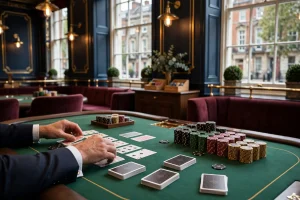
Live Baccarat Online Casinos in the UK: What to Check
A practical guide to UK licensing, baccarat bets, live table formats, commissions and the bonus...

Live Blackjack at UK Online Casinos: What Matters
Live blackjack adds a streamed dealer and a slower rhythm, so table pace, connection demands...

Live Casino Lightning Roulette in the UK: How It Works
A practical look at the live stream, roulette mechanics, table rules, offers and limits—without treating...

Live Dream Catcher Casino in the UK: How It Works
The guide explains how the studio stream and betting panel work, and what to check...

Mines Casino Game UK: Rules, Risk and Free Play
The guide separates game mechanics and practice claims from operator, regulatory and real-money considerations. Mines...

Monopoly Live Casino in the UK: How It Works
The guide separates the studio format from game rules and covers connection, table terms, free...

Online Bingo in the UK: How Rooms and Slots Work
A practical guide to ticket draws, winning patterns, real-money and free play, and how bingo...

Online Casino American Roulette in the UK
American Roulette uses both 0 and 00, shaping its layout, wheel and betting terms. American...

Online European Roulette in UK Casinos: Rules & Odds
The single-zero wheel, its bets and payouts, and differences between RNG, live roulette and roulette-themed...

Online Casino Games for Real Cash in the UK
The guide explains spin costs, licence boundaries, bonus conditions, cash payouts and Android app choices...
Online Casino Tournaments UK: Free Entry Rules
A practical guide to entry costs, prize conditions, scoring rules, spin limits and tournament schedules....

Online Casinos Without ID in the UK: What to Know
A light-touch registration process does not remove a licensed casino’s duty to verify age and...

Plinko Casinos in the UK: Licensing and Payments
The game label alone does not show whether a platform is within the UKGC system...