Live Blackjack at UK Online Casinos: What Matters
 Available in GB

Live blackjack adds a streamed dealer and a slower rhythm, so table pace, connection demands and starting stakes shape the fit.
Table of Contents
- What “Best” Means at a Live Blackjack Table
- How the Live Dealer Experience Works
- Choosing a UK Blackjack Site: Licensing and the Details That Matter
- How Blackjack Works—and Why No System Guarantees a Win
- Physical Cards, Not a Digital Deal
- Live Blackjack in the UK: What the Format Actually Delivers
- The 21-Point Objective and the Limits of “Free” Play
- Placing Bets Through the Live Table Interface
- Blackjack Bonuses: The Wagering Catch
- Table Pace and Starting Stakes
What “Best” Means at a Live Blackjack Table
“Best” is not a fixed position in a league table. In live blackjack, it is a question of fit: whether the pace, connection demands and starting stake suit the way someone wants to play. A site can look appealing in a comparison and still be a poor match for a player who prefers quick decisions or needs to keep each stake particularly low.
The central trade-off is straightforward. Digital blackjack moves faster; a live table takes longer because the game is streamed with a dealer. That slower rhythm is part of the format, not a fault that can be corrected by choosing a different label or offer. It changes how much time a session takes and how often decisions come around. Someone who values an unhurried, human-led setting may see that as the point. Someone looking for rapid play may find the same interval frustrating.
That distinction matters more than broad claims about the “best Blackjack casino”. The phrase suggests there is one answer for everyone, when the useful question is what the table experience asks of a player. A live game is not simply a faster digital game with a different picture on screen. The stream has to keep up, and the player’s connection needs to remain stable. If it does not, the experience can become interrupted at the very moment a decision is due. A reliable connection is a practical requirement, not a bonus feature.
When choosing a UK online casino for live blackjack, it helps to consider practical details alongside the game itself. The listed payout times offer one point of reference.
1. NightWin
Payout speed: 1-3 business days NightWin lists a payout speed of 1–3 business days, a useful detail to consider when reviewing its live blackjack offering.
2. Chanze
Payout speed: 1-3 business days Chanze lists payouts as taking 1–3 business days. This is the available practical detail to keep in mind when considering it for live blackjack.
3. BeOnBet
Payout speed: 1-3 business days BeOnBet gives a payout speed of 1–3 business days, providing a clear point of reference for players considering live blackjack.
4. x3bet
Payout speed: 1-3 business days x3bet lists a payout speed of 1–3 business days. That timing is the available detail relevant to assessing it for live blackjack.
5. Amunbet
Payout speed: 1-3 business days Amunbet states that payouts take 1–3 business days, a practical detail to note when considering its live blackjack option.
6. EvoSpin
Payout speed: 1-3 business days EvoSpin lists a payout speed of 1–3 business days. This provides a straightforward reference point for live blackjack players.
7. SpinFormula
Payout speed: 1-3 business days SpinFormula gives a payout speed of 1–3 business days, the available practical detail for players weighing it up for live blackjack.
8. WinBeast
Payout speed: 1-3 business days WinBeast lists payouts as taking 1–3 business days. This timing is worth noting when considering it for live blackjack.
9. NightLuck
Payout speed: 1-3 business days NightLuck states a payout speed of 1–3 business days, offering a clear practical detail for live blackjack players to consider.
10. SlotoSport
Payout speed: 1-3 business days SlotoSport lists a payout speed of 1–3 business days. This is the available practical information to consider alongside its live blackjack offering.
There is also a financial difference to weigh before settling on a table. Live blackjack has higher minimum bets than digital versions. The relevant starting stake is therefore not an incidental detail: it determines whether a table is usable within a person’s budget at all. A title can be attractive in principle but unsuitable in practice if its minimum does not leave enough room to play at a comfortable level. Set a budget before playing, and treat the table’s minimum as a condition to assess against it, not as a challenge to meet.
I have seen how easily the word “best” gets reduced to whatever is most visible in a promotion. Visibility is not fit. A headline cannot make a slow format fast, improve a weak connection or change the minimum attached to a table. The basic screening is less glamorous: establish whether live play is actually wanted, whether the connection is dependable, and whether the stated minimum fits the intended budget. If any one of those points fails, a glowing description does not solve the mismatch.
The same applies when comparing the best Blackjack casinos UK or looking for an online blackjack casino that seems suited to a particular style. Those phrases do not identify a universal winner. They describe a search for a workable combination of format and conditions. It is more useful to compare the experience on its own terms than to assume that a prominent label, a large range of tables or a polished presentation makes one option right for every player. No ranking can decide how much waiting feels acceptable or what stake is comfortable.
Best Keno Casinos Online in the UK: What to Check
A sensible assessment also leaves room for the fact that preferences differ. Some players are prepared to exchange speed for the presence of a live table. Others would rather have the quicker rhythm of a digital game. Neither preference is inherently more serious or more informed. The mistake is expecting one format to deliver the advantages of the other without its trade-offs.
Before play, the table’s rules and paytable should be reviewed, and the budget should remain the boundary for the session. Those are practical checks, not a route to certainty: blackjack still involves gambling, and no table choice removes that fact. This is entertainment, not gambling advice. A good fit is simply one whose pace, connection demands and minimum stake are understood before play begins.
From an industry perspective, “best” is most useful when stripped of its advertising gloss. It does not mean the table that makes the biggest promise. It means the one whose real conditions match what a player is prepared to accept. Sometimes that answer is a live table. Sometimes it is not. The distinction is plain.
How the Live Dealer Experience Works
A live blackjack table is a real-time broadcast, not a prerecorded sequence dressed up to look immediate. A human dealer appears on screen, and the action is streamed as it happens. That changes the feel of the game: attention moves between the table, the dealer and the other people connected to the same session. The experience is shared, even though each player participates remotely.
A live blackjack table is a real-time broadcast where a human dealer handles the game, creating a shared experience for all connected players.
The dealer is more than a visual detail. Seeing a person run the table gives the session a point of contact that a purely digital game does not have. The dealer can be seen and interacted with, though the interaction is bounded by the table’s format. This is not a private conversation or a guarantee that every message will receive a response. It is a live game with a human at its centre.
Chat is one way a table may support that contact. Depending on the table, messages can be directed to the dealer or shared with other players. In practice, chat adds a social layer rather than changing the underlying game. A brief greeting or comment can make the session feel less like playing against a screen; a busy chat window can also be easy to ignore. Neither is essential to taking part.
There is a small but important distinction between interaction and influence. A dealer may be visible and reachable through the table’s features, but conversation does not give a player control over the deal or over another participant’s decisions. I have seen promotional language blur those ideas: “immersive” can sound as if the room is responding personally. What it really means is that the game is presented as a live session, with a dealer and, where enabled, channels for communication.
Some tables also offer side bets. These sit alongside the main blackjack wager and create an additional choice within the same session. Their availability depends on the table; they should not be assumed to appear everywhere. A side bet is not the same thing as a message to the dealer, nor does it make the table more interactive in itself. It is a separate betting option, with its own terms and outcome.
Live Dream Catcher Casino in the UK: How It Works
Bet Behind is another possible feature. It allows a player to follow a seat’s action by placing a wager behind that player, rather than taking the seat and making the decisions for that hand. That can suit someone who wants to participate while leaving the playing decisions to another person. It also means the player is relying on someone else’s choices, not making those choices personally. The feature may be offered at a table, but it is not a standard part of every live blackjack session.
These options are best understood as separate layers: the stream provides the live setting, chat can provide communication, and side bets or Bet Behind can add different ways to take part. A table may offer one, several or none of the additional features. Their presence does not alter what the format is: a dealer-led game broadcast in real time, with interaction available through the tools provided on screen.
From the operator’s side, those tools help a live table feel like a room rather than a set of isolated prompts. From the player’s side, the practical question is whether the extra activity is welcome or distracting. Chat can be left alone; side bets and Bet Behind can be declined. The table does not require every feature to be used.
This is entertainment, not gambling advice. The live presentation can make the experience feel more social, but it does not change the uncertainty of gambling. The human presence is real. So is the wager.
Chat
Allows players to send messages to the dealer or other participants, adding a social layer to the session.
Side Bets
Additional wagering options that exist alongside the main blackjack bet, depending on the table.
Bet Behind
Enables a player to place a wager on another participant’s seat rather than making their own decisions.
Choosing a UK Blackjack Site: Licensing and the Details That Matter
A blackjack table can be streamed professionally and still be offered by a site that is not entitled to serve customers in the UK. The first distinction is legal, not cosmetic: live dealer casinos are legal in the UK when they hold a licence from the UK Gambling Commission (UKGC). A polished table page, familiar payment branding or confident claims about trust do not replace that condition.
I have seen how presentation can make an operator look established before the important details have been read. Licensing is the threshold check; it is not a verdict that every table or term will suit every player. The practical question after that is whether the site explains what it is offering clearly enough for its claims to be checked.
Start with the licence
For blackjack casino sites serving the UK, the UKGC licence is the basic requirement for legal operation. This applies to live dealer casinos as well as other online casinos. A site’s own statement about being licensed is useful only as a starting point: the relevant point is whether the operator holds the required UKGC licence, not whether its page uses words such as “safe” or “trusted”.
Casino Dice Games in the UK: Understanding Online Play
That distinction matters because marketing language is designed to reduce hesitation. A licence is a regulatory condition; an adjective is a claim. Neither the appearance of a website nor the presence of live tables establishes that condition by itself.
Read the table information, not just the label
Once licensing is clear, the table page should make the relevant game information accessible. I look for rules and the paytable before treating a blackjack listing as a meaningful offer. A game name or prominent “live” badge says little about the conditions that apply at that particular table. If the material is difficult to locate, vague, or inconsistent with the wording elsewhere on the site, that is a reason to pause rather than fill in the gaps by assumption.
Terms should also be read as operating conditions, not as decorative text. The point is not to hunt for a hidden catch in every sentence; it is to understand what the site says applies to the account and the game. Where a term is unclear, the uncertainty remains. A broad promise on a landing page does not settle a narrower condition elsewhere.
Fast-Payout Online Casinos in the UK: Keno Returns
This is how I separate a useful comparison from a ranking. Lists of “best” blackjack online casino sites can make unlike offers look directly comparable, while the deciding details may sit in separate game pages or terms. A site that suits one person’s preferences is not automatically the best blackjack casino site for another. Clear information is more useful than a badge or a numbered position.
Keep the decision practical
The strongest sign of transparency is not a claim that a site is effortless or exceptional. It is information presented in a way that can be checked before play: the operator’s licensing status, the rules for the table, the paytable and the terms that apply. These are separate checks. Passing one does not answer the others.
I also treat uncertainty as a real part of the decision. If the rules are not clear, a table description cannot resolve them. If the licensing position is not clear, attractive presentation cannot resolve that either. No need to dress it up.
This section is for entertainment purposes only, not gambling advice.
Chicken Road Casino UK: Game Labels and Risks
How Blackjack Works—and Why No System Guarantees a Win
Blackjack has a simple central contest: build a hand that beats the dealer’s without its total going over 21. That is the aim, not a promise of a result. A hand can fall short of the target and still win if the dealer’s hand fares worse; it can also look strong and lose when the dealer finishes higher. The outcome depends on the hands dealt, not on how confidently a betting plan is followed.
That distinction matters when considering how blackjack works in a casino. The game gives players decisions to make, but those decisions do not put the cards under their control. Understanding the objective helps make sense of what is happening at the table. It does not remove chance, or guarantee that a particular approach will produce a profit.
I have seen the language around “winning systems” blur those two ideas. A system can organise how much is staked or when a player chooses to stop. It cannot ensure that the next hand will be favourable. The house edge remains, and no staking pattern turns a run of uncertain outcomes into a guaranteed return.
Fast Payout Online Casinos UK: How to Assess Claims
Martingale is a familiar example. In its basic form, the stake is increased after a loss, with the idea that a later win could recover earlier losses. The catch is that a win is not scheduled to arrive at a convenient point. Losses can continue, and each increase exposes more money to the next result. A subsequent win may not recover the full amount committed, particularly if the player has to stop before it comes. The method changes the size and timing of risk; it does not change the underlying game.
This is why a strategy and a staking system should not be treated as interchangeable. Knowing the objective gives a player a framework for understanding the contest. A staking system only determines the pattern of bets. Neither makes the dealer’s hand predictable, and a sequence of wins does not prove that the next one is due. Nor does a run of losses create an obligation for the game to balance the books.
The practical limit is financial, not theoretical. Before playing, set a budget and keep to it rather than raising stakes to recover losses or extend a winning run. That boundary does not improve the odds; it limits how much the session can cost. If the planned budget is gone, the system has no special claim to another chance.
So, questions about how to win at casino blackjack have no guaranteed answer. The game’s objective can be understood, and decisions can be made with that objective in mind, but the house edge remains part of the arrangement. I separate knowing what the game asks from believing that a betting sequence can command its outcome. One is useful understanding. The other is a risk dressed up as certainty.
Physical Cards, Not a Digital Deal
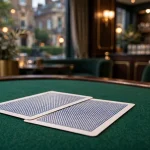
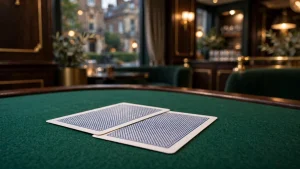
The defining detail of live blackjack is easy to miss among the stream and table graphics: the dealer handles physical cards from a standard deck. The cards are not merely illustrations added to a digital game. They are the objects being dealt at the table, in view of the camera.
In live blackjack, the dealer uses physical cards from a standard deck, meaning the cards are real objects handled in view of the camera rather than digital animations.
That distinction gives the format its particular texture. A card appears because the dealer has taken and dealt it, rather than because a digital interface has displayed a result. The screen still matters, but it carries an image of a real dealing process. For me, that is the point at which live blackjack stops feeling like a software game dressed up as a casino table.
It is also a narrower claim than some promotional language suggests. Physical cards tell us what is being handled; they do not, by themselves, establish that a game is fair, that a particular outcome is more likely, or that a player has an advantage. The physical format changes what can be seen, not the basic uncertainty of a card game. Real cards. Uncertain outcomes.
A casino blackjack game can therefore appear in more than one form. In a digital version, cards are represented on screen. At a live table, the dealer deals physical cards from a standard deck. Both present blackjack, but the visible source of the cards differs. For someone comparing formats, that is a concrete distinction; claims about atmosphere or authenticity are more subjective.
The camera makes the dealing process part of the product. It lets the viewer see cards being handled instead of relying solely on animated graphics. That does not mean every detail of the setup is visible at all times, or that a stream reveals everything about how a table is managed. It means only that the live game uses physical cards and shows a human dealer dealing them. No more, no less.
French Roulette Online Casinos in the UK
This is why “real” can be a slippery word in casino descriptions. It may point to the dealer, the studio, or the cards, while sounding like a wider assurance. I would read it literally. In live blackjack, the cards are physical; the game is still delivered through a screen, and the interface remains part of the experience. The physical deck is one verifiable feature, not a general guarantee attached to the word “live”.
For UK players considering a casino blackjack game, the format is best understood through that simple contrast: digital cards on one side, a dealer handling a standard deck on the other. The latter gives the stream a tangible event to show. It does not remove the distance between the table and the viewer, nor turn a streamed game into an in-person one. The cards are there. The player is still watching remotely.
That modest description is more useful than treating physical cards as a promise. The format offers a visible, human dealing process, while the card outcomes remain uncertain. A real deck, not a prediction.
Live Blackjack in the UK: What the Format Actually Delivers
Live blackjack is a streamed table, not a digital game dressed up with a dealer’s image. The game takes place in real time, with a human dealer visible on screen. That is the defining difference: the table has a person at its centre, and the online experience follows the action as it happens.
I have found that this distinction matters more than the label “live” suggests. In a standard digital blackjack game, the software presents the action without a dealer appearing as part of the game. In a live blackjack casino, the stream connects the player to a dealer working at a table. It gives the game a shared, human-facing setting, even though participation still happens online.
Live vs Digital Format
Digital blackjack is software-driven without a dealer appearing as part of the game. Live blackjack connects players to a real-time studio stream with a human dealer, providing a more social setting while remaining an online experience.
The dealer is not merely a decorative presence. Players can see them and interact with them during the session. That interaction is part of the product’s appeal: the game feels less like pressing through a sequence of screens and more like taking a place at a table where a person is running the game. The setting remains mediated by a screen, of course. It is not the same as being in a physical casino.
That difference can shape expectations. Live blackjack does not turn online play into a private, face-to-face conversation with a dealer; the stream is the common setting for the table. The human presence is real, but the experience is still designed and delivered as an online game. I would describe it as a more social presentation of blackjack, rather than a different kind of blackjack altogether.
The phrase “real casino feel” can oversell the point. What it actually means is that the dealer can be seen in real time and that interaction is possible while the game is under way. The stream provides the atmosphere; it does not remove the distance between the player and the table. That is the useful distinction.
For anyone comparing online casino blackjack with its live counterpart, the choice is therefore about format. The live version puts a human dealer on screen and makes the session feel more connected to a shared table. It does not, by itself, change what blackjack is or promise a better result. The experience is the product.
A UK blackjack casino offering live tables is selling that combination of familiar game and visible dealer. The online setting remains central: the dealer is viewed through a stream, and the player joins from a screen. Live blackjack in the UK in 2026 is best understood on those terms—not as a physical casino transported intact, but as a real-time online table with a human presence.
Live Roulette UK with English-Speaking Dealers
That is the format. Not a replica.
The 21-Point Objective and the Limits of “Free” Play
The central aim in blackjack is straightforward: finish with a hand that beats the dealer’s without going over 21 points. Reaching 21 is not the only way to win; a lower total can be enough if the dealer’s hand is lower. The objective is about the final comparison, not simply collecting cards until the target appears.
That is the useful starting point for understanding blackjack rules in UK casinos. The game may be presented through different interfaces, but the aim remains the same: make a hand that stands up against the dealer’s while staying within the limit. A total above 21 misses that limit. The language can be dressed up in promotional copy. The arithmetic cannot.
I have seen “free” used as if it were a gentle introduction to the real thing. In practice, it describes play that does not offer a route to real payouts. A free-play table may resemble a cash table on screen, but any displayed balance or result belongs to the demonstration, not a withdrawable gambling account. Similar appearance is not the same as equivalent value.
This distinction matters because blackjack’s objective and the meaning of free play are separate issues. A demonstration can show how the goal works without turning its outcomes into money. It can be useful for getting familiar with the idea of beating the dealer without exceeding 21, but success in that setting does not create a cash balance or guarantee anything at a real-money table.
Attention Free-play tables are demonstrations only; they do not offer a route to real payouts regardless of the results achieved.
The word “free” also says little by itself about what is being offered. It may mean a no-cost demonstration, not a bonus that can be converted into a payout. The terms attached to an offer determine what it allows; the label alone does not. Where real-money play is involved, the distinction should be clear before any deposit or participation.
For a real-money session, the same objective applies, but money is at risk. A preset budget keeps that decision separate from the excitement of a hand. I learned to treat the game’s simple target and the commercial wording around it as two different things: one explains the play, the other describes the offer. Neither changes the basic point total, and neither makes a result certain.
A free version can explain the shape of the game. It cannot pay out. That boundary is the part worth keeping in view.
Placing Bets Through the Live Table Interface
Live blackjack combines two separate parts of the experience: a studio feed showing the game as it happens, and an on-screen interface through which bets are submitted. The dealer and table are on the stream; the wager is made digitally. That distinction matters. Watching the action does not itself place a bet, and the interface is not simply a picture of a physical casino table.
In practical terms, the player follows the live feed while using the table controls to enter a wager. The system carries that selection into the live game. This makes the experience part broadcast and part online transaction: the dealer handles the game in the studio, while the player’s participation reaches the table through the software. The two elements need to stay in step.
Online Bingo in the UK: How Rooms and Slots Work
I have found it useful to think of the screen as having two jobs. One area presents what is happening at the table; another provides the means to participate. Attention can shift between them, but a streamed image should not be mistaken for confirmation that an action has registered. The interface is where the wager is made. A clear view of the game and a stable connection help keep those parts usable together.
Before joining a live blackjack table, the practical checks are simple but important: review the table rules and paytable, set a budget, and make sure the connection can sustain a real-time stream. A connection that repeatedly drops can interrupt the view of the game, even though betting is handled on screen. Live play is less forgiving of distractions than a game that runs entirely on a device.
That separation also explains why the format can feel different from digital blackjack. The screen is not just generating a sequence of outcomes; it is carrying a live studio feed alongside the controls for wagering. There is a human dealer on the stream, but the player does not hand over chips or speak a bet into the room. Participation remains mediated by the interface.
For anyone looking to play blackjack online in the UK, the important operational point is that bets are placed through the on-screen system while the game itself is streamed from a studio. It is a straightforward arrangement once the two roles are clear. The stream shows the table. The interface submits the bet.
Do
- Review table rules and paytables first
- Set a strict budget for the session
- Ensure a stable internet connection
Don’t
- Mistake the stream for the wagering interface
- Assume digital cards and live decks are the same
- Ignore the impact of connection drops
This is entertainment, not gambling advice. A budget set in advance is a boundary, not a target to exceed.
Blackjack Bonuses: The Wagering Catch
A blackjack casino bonus can look relevant because it appears beside a live table, but placement is not the same as eligibility. The offer’s terms decide which games can be played with it and how much each game contributes towards any wagering requirement. I have seen that distinction do more work than the headline.
A specialist review of UK welcome offers reports that most are free spins on slots, which cannot be used at live tables. That matters before a bonus is claimed: an offer built around slot spins does not become a blackjack casino bonus simply because the same site also provides live blackjack. The promotional label is broad; the permitted use may be narrow.
Where live games are eligible, their contribution can still be limited. The stated weighting may mean that only a small share of qualifying play counts towards the wagering requirement; one cited example is 10%. The remainder does not disappear from the terms. It means the bonus can take longer to clear through live play than its headline wording might suggest.
I would read the offer in this order: eligible games, contribution by game, wagering requirement, and any maximum-bet condition while the offer is active. Those details determine whether a casino blackjack bonus offer fits the intended use. A high headline value says little about that. Fine print decides.
The same applies to a no-deposit offer. “No deposit” describes how an offer is funded, not whether it can be used at a live table or whether live blackjack contributes meaningfully towards its requirements. A blackjack casino no-deposit bonus UK search may turn up promotions with very different rules; the name alone does not settle eligibility.
Crazy Time live casino game show in the UK: how it works
A useful comparison is not between bonus headlines, but between the terms and the game being played. If live blackjack is excluded, or has a low weighting, the offer may have little practical value at that table. If it is included, the contribution and restrictions still matter. I would treat the bonus as a separate calculation from the game itself, rather than as extra value automatically attached to a session.
The short version: check the terms before opting in. A bonus is a contract with conditions, not a stake added without strings.
Table Pace and Starting Stakes
Live blackjack asks for a different time and budget commitment from a digital game. The dealer sets the rhythm, so hands move more slowly; there is no quick sequence of clicks to compress a session. That can suit a measured pace, but it also means the table’s minimum stake matters more: each decision occupies more time, and the entry point determines whether the game fits a set budget.
Starting limits vary by table. A specialist review has reported that some live roulette and baccarat tables begin at around 20p, while blackjack tables may open at a higher stake. That is a reported comparison, not a dependable rule for every casino or table. A live Blackjack casino site can offer more than one table, but the displayed minimum is the practical starting point for each one. It is worth checking the table information before joining rather than assuming that a low entry stake elsewhere applies here.
Live Baccarat Online Casinos in the UK: What to Check
The gap between digital and live play is not just visual. Slower dealing reduces the number of hands that can be played in a given stretch of time, while a higher minimum can make each hand carry more financial weight. A small-looking difference in the minimum is still relevant when the pace is deliberate. Budget first. Then choose a table whose entry stake fits it.
Connection quality is another part of access. Live games rely on a stable internet connection to deliver the stream and keep the table usable; interruptions can make a slow format more frustrating, not faster. These practical limits matter more than a site’s broad label as an online casino with Blackjack. The table’s pace, minimum and connection demands define the actual fit. No shortcut.
Why does the dealer always win in blackjack?
The dealer does not always win. Blackjack retains a house edge, giving the casino a statistical advantage over time, but individual hands can go either way.
How can you win live dealer roulette?
You win when the ball lands on a number you selected. No bet can guarantee a win.
How do you choose a live dealer casino?
Choose a UK casino licensed by the Gambling Commission, then check that the table’s pace, minimum bet and rules suit you. You’ll also need a stable internet connection for the live stream.
What are the different types of roulette you can play with a live dealer?
Live roulette includes European, American and French variants. American Roulette has 0 and 00, while European Roulette has a single 0; in French Roulette, an even-money bet loses only half when the ball lands on 0.
Casino Games

Aviator Casino Game UK: Rules, Licensing and Play
A guide to Aviator’s format, casino terms and the distinction between UKGC-regulated operators and offshore...
3-Reel Slots in the UK: Play, Rules and Odds
A guide to online three-reel games, separating reel count and classic styling from odds, features,...
5-Reel Slots in the UK: How to Compare Games
Five vertical columns are only the layout; each game's rules define qualifying symbol patterns and...
Bonus Buy Slots in the UK: Demo and Feature Guide
A practical guide to exploring the feature, understanding its limits and weighing how it can...

Fast-Payout Online Casinos in the UK: Keno Returns
Keno returns depend on selected spots, catches and the paytable; a quick round does not...

First Deposit Bonus Casinos in the UK: What to Check
A first-deposit label does not define the reward: the promotion’s terms determine how it is...

High-volatility slots UK: how payouts and variance work
High volatility usually means less frequent wins with returns concentrated in larger payouts, not a...

Best Keno Casinos Online in the UK: What to Check
See how spot selections, draw formats and paytables shape online keno, and what to check...
Live Casinos in the UK: Licensing, Games & Offers
Understand who needs a licence, how live tables work and what to check in casino...
Low-Volatility Slots in the UK: How They Work
Low volatility describes a tendency towards more frequent, smaller returns, not a guarantee of wins...

Online Slot Payout Percentages: What RTP Means
A payout percentage describes designed return across broad play, not the result a player should...
RTP in UK Casino Slots: What the Figure Means
RTP is a long-run mathematical expectation, not a guide to when a slot will pay...

UK Video Slots: Volatility, Features and Casino Checks
Understand how returns, game features and casino checks affect the way online video slots are...

Casino Dice Games in the UK: Understanding Online Play
Online dice can describe a visual style, but the display alone does not explain a...

Chicken Road Casino UK: Game Labels and Risks
A casino label alone does not establish a game’s format, rules, availability or the conditions...

Crash Casino Games in the UK: How They Work
A crash title’s rules, randomness, payment options and access to real-money play depend on the...

Crazy Time live casino game show in the UK: how it works
Crazy Time pairs a real-time studio stream and human dealer with on-screen controls for submitting...

Deal or No Deal casino UK: how the game works
See how the briefcase format translates into slot play, and what the available details do—and...

Fast Payout Online Casinos UK: How to Assess Claims
A fast-payout claim can refer to different stages or conditions, so its wording alone does...
French Roulette Online Casinos in the UK
La Partage and En Prison affect even-money losses, while wheel type, game format and table...
Hi-Lo Casino UK: Rules, Calls and Game Types
See how card comparisons, tie rules and pay tables affect outcomes across live, reel-based and...

High-RTP slots in the UK: what RTP can tell you
RTP describes a game's theoretical return over extensive play, but it cannot predict an individual...
JetX Casino Game in the UK: Labels and Evidence
A cautious guide to JetX’s format, demo play, UK market context and the limits of...
Live Baccarat Online Casinos in the UK: What to Check
A practical guide to UK licensing, baccarat bets, live table formats, commissions and the bonus...

Live Casino Lightning Roulette in the UK: How It Works
A practical look at the live stream, roulette mechanics, table rules, offers and limits—without treating...

Live Dream Catcher Casino in the UK: How It Works
The guide explains how the studio stream and betting panel work, and what to check...

Live Roulette UK with English-Speaking Dealers
A live dealer spins a physical wheel in a studio, while the online interface carries...

Mines Casino Game UK: Rules, Risk and Free Play
The guide separates game mechanics and practice claims from operator, regulatory and real-money considerations. Mines...

Monopoly Live Casino in the UK: How It Works
The guide separates the studio format from game rules and covers connection, table terms, free...

Online Bingo in the UK: How Rooms and Slots Work
A practical guide to ticket draws, winning patterns, real-money and free play, and how bingo...
Online Casino American Roulette in the UK
American Roulette uses both 0 and 00, shaping its layout, wheel and betting terms. American...

Online European Roulette in UK Casinos: Rules & Odds
The single-zero wheel, its bets and payouts, and differences between RNG, live roulette and roulette-themed...

Online Casino Games for Real Cash in the UK
The guide explains spin costs, licence boundaries, bonus conditions, cash payouts and Android app choices...
Online Casino Tournaments UK: Free Entry Rules
A practical guide to entry costs, prize conditions, scoring rules, spin limits and tournament schedules....

Online Casinos Without ID in the UK: What to Know
A light-touch registration process does not remove a licensed casino’s duty to verify age and...

Plinko Casinos in the UK: Licensing and Payments
The game label alone does not show whether a platform is within the UKGC system...